



-150x150.png)




A resilient industrial network architecture is essential for containing cyber risks within operational technology (OT) environments. While network segmentation and security controls provide important layers of protection, unsecured network devices can still become entry points for cyber attackers if proper safeguards are not implemented.
Device hardening enhances industrial cybersecurity by minimizing the attack surface and embedding protection mechanisms directly into device operations. Reducing potential vulnerabilities enables organizations to strengthen OT cyber resilience and improve the security of critical infrastructure against increasingly sophisticated threats. Moxa addresses these challenges through its Secure-by-Design framework, integrating cybersecurity requirements from the earliest stages of product development and supporting them with embedded security features, ongoing vulnerability management, and lifecycle security maintenance.
Integrated Security Protection Across the Moxa Portfolio
Secure-by-Design Development
Cybersecurity Standards Alignment
Vulnerability Management
Secure-by-Design Development
-
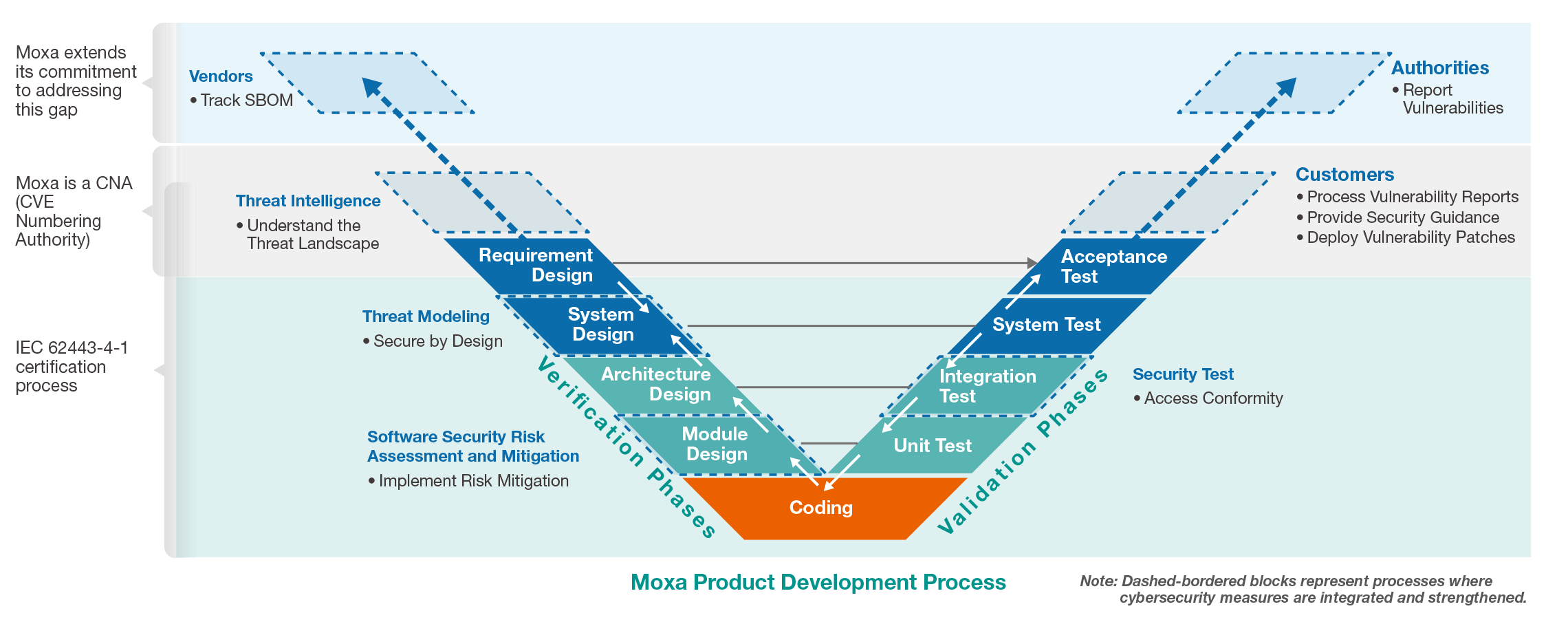
Successful device hardening begins well before deployment. Moxa applies a Secure-by-Design strategy that embeds cybersecurity controls throughout the entire product development lifecycle, helping reduce attack surfaces and address vulnerabilities in industrial OT environments before they become exploitable.
Key security engineering measures include:
- Threat modeling incorporated into system architecture and industrial network design
- Secure coding practices supported by strict development procedures
- Cybersecurity requirements integrated into product validation and qualification processes
- Security testing, penetration testing, and vulnerability assessments
-
This security-focused development philosophy equips Moxa industrial networking devices with embedded hardening capabilities that support OT security and critical infrastructure protection:
- Secure Boot technology for device integrity validation and authenticity verification
- Least-privilege architecture that removes unnecessary services and minimizes exposure
- Multi-factor authentication combined with granular role-based access control (RBAC)
- Network access authentication to ensure only authorized devices can connect
- End-to-end encrypted communication for secure remote access and configuration management
Industrial Cybersecurity Standards Alignment
Achieving measurable cyber resilience in industrial automation depends on compliance with internationally recognized cybersecurity standards. Moxa develops and certifies its industrial networking solutions according to leading global security frameworks, helping operators satisfy regulatory requirements while reducing cybersecurity risks across critical infrastructure environments.
Major industrial cybersecurity certifications and regulatory frameworks include:
- IEC 62443-4-1, Secure Development Lifecycle (SDL) certification for industrial product development
- IEC 62443-4-2, component-level cybersecurity requirements for industrial automation and control system (IACS) devices
EU Cyber Resilience Act (CRA) and RED Delegated Act (RED-DA), mandatory cybersecurity regulations for connected devices in European markets.
- JC-STAR, Japan's cybersecurity certification framework for connected IoT and industrial devices
Moxa was among the earliest industrial networking manufacturers worldwide to obtain IEC 62443-4-1 SDL certification, while multiple product families have also achieved IEC 62443-4-2 certification. This commitment to international standards demonstrates Moxa's focus on delivering secure, compliant, and trusted networking solutions for industrial automation, transportation, energy, and other mission-critical applications.

Cybersecurity Vulnerability Management
The industrial cybersecurity landscape continues to evolve rapidly as new vulnerabilities emerge and threat actors increasingly target OT environments and connected industrial assets. Maintaining long-term device security requires a proactive vulnerability management strategy that extends far beyond initial deployment.
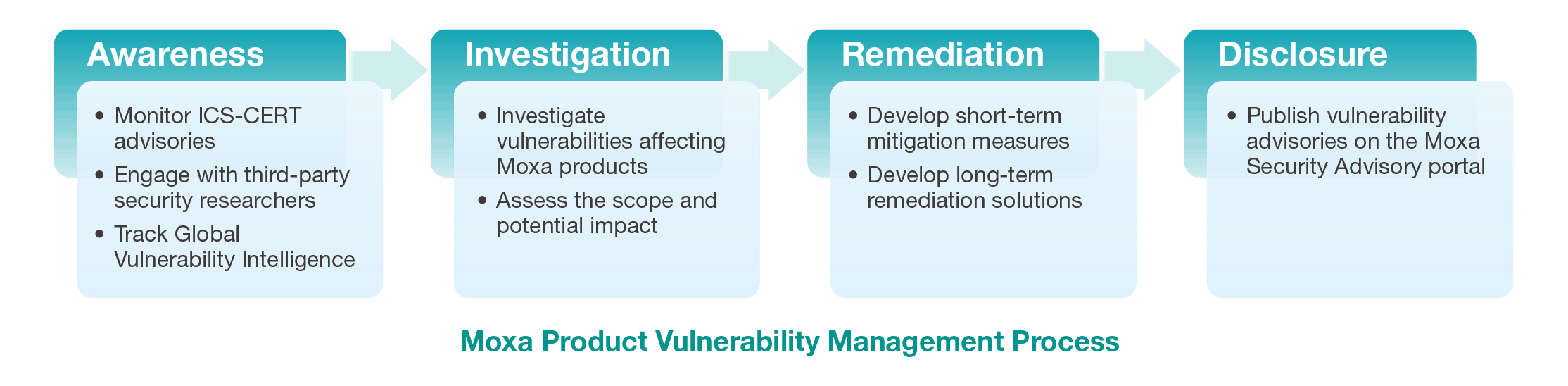
Moxa's dedicated Product Security Incident Response Team (PSIRT) follows industry-recognized procedures to identify, evaluate, and mitigate cybersecurity vulnerabilities throughout its industrial networking portfolio:
- Continuous monitoring of security advisories, CVE databases, and vulnerability disclosure channels worldwide
- Detailed impact analysis across affected products and industrial deployments
- Rapid delivery of mitigation guidance, firmware updates, and security patches
- Timely publication of security advisories and remediation recommendations for operators and system integrators
This proactive vulnerability management process helps industrial organizations address emerging threats more effectively, lower operational cybersecurity risks, and preserve the integrity of industrial network infrastructure throughout the product lifecycle.

Related Products